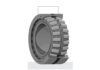





Featured Products: Ceramic Ball and Wheel Hub Bearing AI Visual Inspection Equipment
1. Core Challenges in Bearing Inspection for New Energy Vehicles
Dual Challenges of High-Precision Manufacturing and New Material Properties
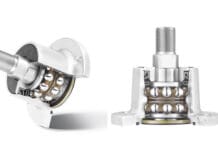
The manufacturing precision requirements for core components such as motors generally reach the micrometer level. Minor surface scratches can lead to severe failures. For instance, surface defects (e.g., pits, scratches) on ceramic ball bearings may directly impact bearing lifespan. Additionally, the anti-rust oil layer on wheel hub bearing surfaces creates strong reflections, making it difficult for traditional vision systems to distinguish between oil stains and defects like dents or scratches.

Complex Production Environments and Efficiency Bottlenecks
New energy vehicle production lines often operate under extreme conditions, such as high temperatures (>85°C) and humidity (>90%). Meanwhile, production line cycle times demand inspection systems to process single frames in <100ms, rendering manual inspection inadequate for largescale, high-quality output requirements.

2. Opportunities for Visual Inspection Technology in the New Energy Vehicle Sector
Market Expansion and Policy Drivers
 The bearing market for new energy vehicles is projected to exceed ¥100 billion by 2025, with traditional contact-based inspection methods being replaced by intelligent visual systems. Upgraded industry standards and policies like the New Energy Vehicle Operational Safety Performance Inspection Regulations are driving demand for high-end inspection equipment.
Technological Innovation and Intelligent Upgrades
The integration of AI and edge computing has improved the accuracy of visible defect recognition in images to 100%, while reducing false detection rates by 5%–10%. For example, K2 TECH’s AI inspection system can accurately identify complex surface defects such as cage claw damage, oil stains, missing characters on wheel hub bearing bolt surfaces, and black spots. Additionally, operational convenience and compatibility have significantly improved, with new defect types added in just 5–8 minutes.
 Industry-Wide Penetration and Application Scenarios
 Visual inspection has expanded from traditional appearance defect identification to process optimization and quality traceability. For instance, K2 TECH’s 4680 cylindrical lithium battery inspection line integrates OCV voltage detection with visual defect recognition, achieving a detection speed of 200PPM and an overkill rate of just 3%.
 3. K2 TECH’s Technical Solutions and Industry Impact
 3. K2 TECH’s Technical Solutions and Industry Impact
Breakthrough in Ceramic Ball Inspection To address the mirror-like reflections on ceramic ball surfaces, K2 TECH continuously optimizes neural network structures, achieving a defect recognition accuracy of over 99.5% for scratches, pits, and other flaws. The system quickly adapts to ceramic balls of varying specifications and materials, improving detection precision for minor defects (<0.1mm) to 98.7%. The equipment supports 360° continuous overlay imaging, with an inspection speed of 2,000 pcs/hour, while simultaneously outputting defect type, location, and size data—meeting the stringent quality control standards of aerospace-grade ceramic bearings.

 Setting the Benchmark for Hub Bearing Inspection
To tackle challenges like anti-rust oil reflections and diverse defect types (over 20 categories), K2 TECH developed a specialized algorithm library. By combining OCR character recognition with segmentation algorithms, the system accurately distinguishes contaminants, dents, rust, and other defects. With an inspection speed of 300 pcs/hour, it ensures efficiency while preventing secondary damage.

Smart Production Line Integration and Data Loop
K2 TECH’s AI visual inspection equipment seamlessly integrates with MES systems, providing real-time feedback for process adjustments. The system also supports edge computing and cloud storage, enabling customers to perform defect trend analysis and rootcause tracing through the AI platform, facilitating predictive maintenance.
4. Conclusion
 4. Conclusion
K2 TECH’s equipment has been widely adopted by suppliers for Toyota, Volkswagen, Hyundai, and GM, as well as secondary suppliers for BYD and Tesla. Its technological approach aligns with the new energy industry’s shift towards “zero-defect manufacturing.” Companies that invest in intelligent inspection during capacity expansion cycles will gain a significant competitive edge in the supply chain.
 Office
Qogori Europe Ltd.
Sean :+44 7410097272 (Tel/Whatsapp)
Hangzhou Qogori Tech Co.,Ltd.
Chris :+86-15372028375 (Tel/Whatsapp)